Saturday, April 26, 2014

What are You Eating?
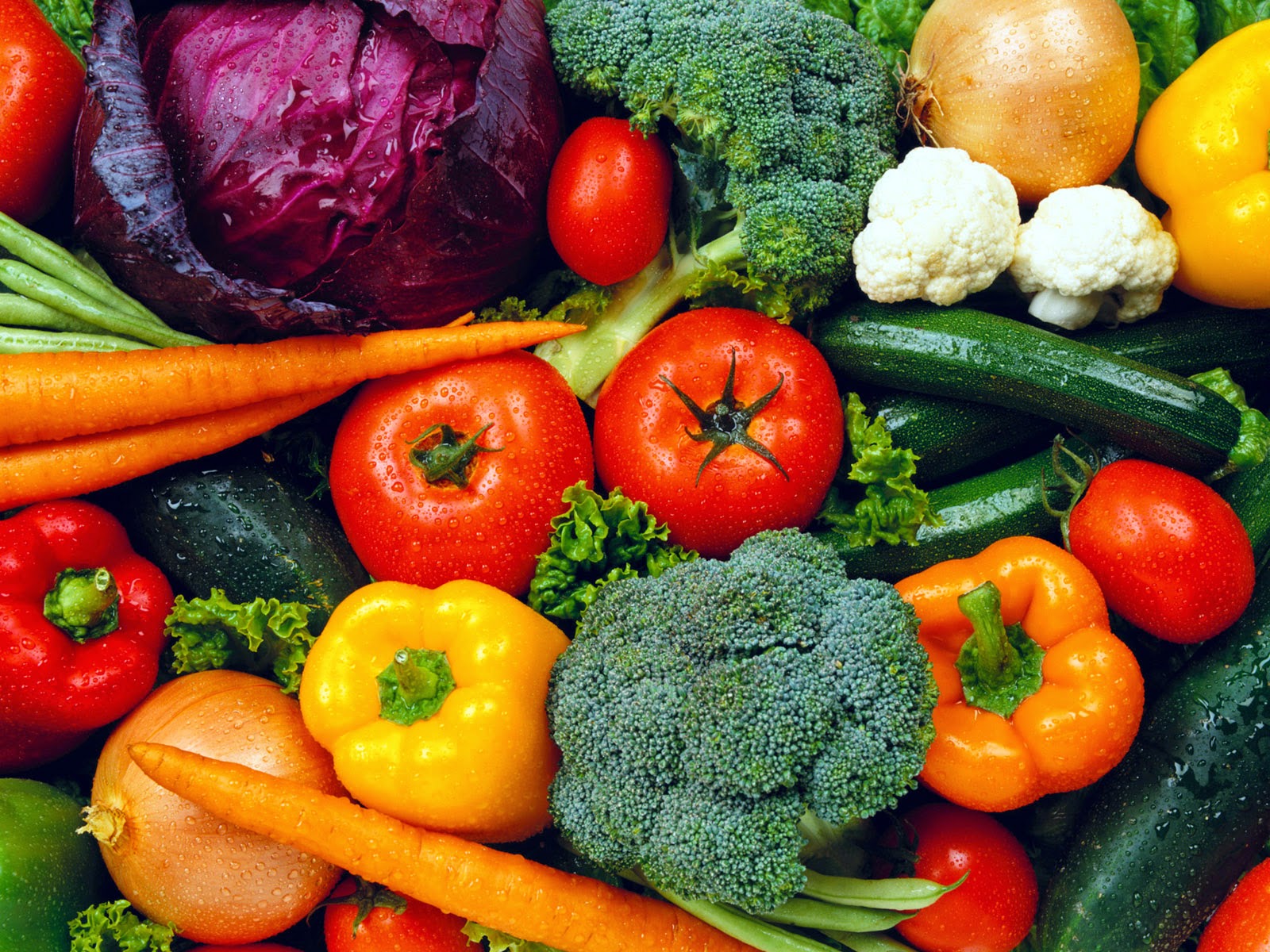

What are You Eating?


Weight: 276.6
Running: Getting better. 2-3 miles per day

As a consequence of my job as an emergency physician, I eat lunch and dinner (and even breakfast, depending on which shift I am working) at my desk. Since I get the opportunity to work on the sickest of patients, who are often unstable and can deteriorate quickly, I have to be close to the action at all times. This means eating at my desk most days. Years ago, I never realized the consequence of eating in public. Since I have been a vegan and back, and vegan again, I have become acutely attuned to an interesting phenomenon: people are always quite interested to what other people eat. While sitting at my desk checking labs, looking at past medical histories, and making medical decisions, many techs, nurses, and other physicians pass me without a second glance. Add an open food container sitting innocently next to me, and suddenly every single person who passes me asks the same question: "what are you eating?"

The interesting thing about the question is how it changes when I am sticking to a vegan diet. It isn't the words. They remain the same. It is the tone that changes. When I have a "balanced" plate in front of me, with meat, veggies, and grains, I get the normal "what are you eating?" No tone, no curiosity, no agenda. Similar to when someone asks "how are you today?" They don't really want to know. All they want to hear is "good," or something similar. It is mainly a rhetorical question.

Oddly, when I have a vegan entree in front of me which is non-traditional, the tone of the encounter changes. Take as an example two days ago. I had for lunch red kidney beans, quinoa, and avocado. Besides being delicious, this dish is full of protein, fiber, good fats, vitamins, and minerals. In short, it is the perfect lunch. Despite its obvious health value, when people looked at my food, they took on an incredulous tone when asking about it. Based on the tone, you would think that I was eating fried tarantula or something equally crazy.

Thinking about the responses of these well meaning people merely confirmed how screwed up our American diet actually is. The reason for the unusual responses is that quinoa and beans is unexpected. It was out of the range of what people who eat the standard american diet expect. These days, we consider a plate of 10 oz meat, a small spoonful of veggies, and a cup of potatoes normal. The diet we were designed to eat was quite different than that.

Our ancestors, before agriculture, were only able to eat what they could find or kill with their bare hands. If you think logically about what their diet might be composed of, we can make some conclusions about what we should be eating. Our ancestors would eat mostly vegetables, as those are plentiful and available year round. Next most likely would be fruit. Fruit is seasonal, but stays still and is easy to collect. Finally, and in the most limited of quantities, would be animal products. Although there are a great many animals in nature, they are rather fast and hard to catch. The ones who aren't fast outweigh us by hundreds of pounds, and have teeth, claws, and tusks to kill us.

Thus, since we are essentially unchanged from our primeval ancestors from a genetic standpoint, the proper diet for modern man should be as follows: 70% vegetables, grains, and legumes. 25% fruit. 5% (or less) meat, eggs, or dairy. Completely off the menu are processed sugars, oils, and flours, as those don't exist in nature in any form. Our bodies are simply not made to process them, and they are the cause of many chronic diseases that we suffer from.

A couple of years ago, when I wasn't quite as mature, I was quite annoyed by the "what are you eating" question. I have since revised my view of the situation. The best way to lead is by example, so when I am eating an extremely healthy meal, and someone asks with suspicion what I am eating, I choose to use it as a teaching moment. Hopefully, if I expose enough people to exciting new vegetables, grains, and fruits, and teach them to avoid animal products such as dairy, meat, and eggs, I can improve not only my health, but also the health of those around me. Not only is that my duty as a physician, but also my goal as a health educator.

The next time someone asks you "what are you eating," consider what you are eating, and if that food is the right kind of food to fuel your body. If so, please share your knowledge with others. For more info on what to eat, please visit www.devolvehealth.com, and learn to eat like our ancestors, and like our bodies were designed to eat.

Quinoa and Red Beans With Avocado
1 cup quinoa, rinsed
1 can red beans
1 avocado
1/4 tsp salt

Cook quinoa according to package directions. Drain red beans. Once quinoa is finished, mix both together. Peel and pit avocado, and dice. Mix in with quinoa and beans. Add salt and mix well. Serves one. Goes well with salad or other green veggies.


\

Wednesday, April 16, 2014

Relapse

Relapse

Hi all. I know it has been a LONG time since I have written. An awful lot has happened to me in the past year and a half or so.

Those of you who have followed my blog the previous couple of years know that through a rigorous vegan diet and daily exercise, I had gone from a horribly obese 350 lbs to a svelte 200. I had reclaimed my health, lost my hypertension and borderline diabetes, and discovered more energy then I knew was possible. My depression, which had plagued me for years, had even gone away. Without a doubt, I knew my avoidance of processed foods and animal foods, as well as daily exercise had been responsible for my weight loss. Overall, I had never felt better in my life. I felt as if I was invincible.

Life, however, is never without its share of tragedy. Just when I thought I had reached my highest point, the universe decided to take me down a peg or two. First, my wife demanded a marital separataion. Not terribly long after, I found out she was having an affair. Finally, three days before our 11th anniversary, she filed for divorce. The marriage I had hoped to save for the months of our separation was over.

I was completely devastated. I went from living in a nice house to a one bedroom apartment. I only got to see my kids 8-10 days a month. The illusion I had of a "good life" was completely shattered. Financially, I was shackled by huge child support and alimony payments, which amounted to approximately 60% of my monthly salary. I was forced to work extra shifts every month in order to make ends meet.

As I have mentioned many times in the past, I am an emotional eater. When I get upset or anxious, I tend to resort to food as my comfort drug. As unhappy as I became, I simply quit. I stopped eating my unprocessed plant-based diet. I stopped exercising. Instead, I took to sitting and watching television to take my mind off of my circumstances. And I ate. A lot. I ate fried chicken, mashed potatoes, macaroni and cheese, pizza, and all of the "comfort foods" that I used to rely on. 

It is surprising how simple it is to slip back into old patterns. I vowed that I would never eat animal products again, but under pressure, that vow was easily broken. Not surprisingly, given the research I have shown in previous blog posts (feel free to read them all), bringing back the animal foods meant the return of the weight, and the return of my chronic diseases. Depression, obesity, and high blood pressure quickly returned. I ballooned from 200 pounds to 280. I was afraid to write blog posts advocating health, because I felt like a hypocrite, and I was ashamed to tell my story, as it had taken a huge turn for the worse. 

Not too long ago, however, I realized something. This part of my story is worth telling. Relapse is part of the process of change. The question to ask is not "will I mess up," but "when will I mess up?" Clearly, resorting to those comfort foods was a huge mistake, and It cost me dearly. 

Thankfully, I regained control of my life. I deepened my connection with God, filling a lot of the void in my life. As much as I hate dating, I also met a wonderful woman who is as fully committed to me as I am to her, and we were wed in January. 

The waters having calmed a little in my personal life, I took a look at my health. At first, I thought going vegan again would be too hard, given that I had strayed from it for so long, so I tried to eat Paleo. That just didn't work for me. One good thing I discovered trying that eating plan was how bad gluten is for us. I will elaborate on that in a future post. 

Finally, since no other eating plan has ever worked for me, I decided to return to a vegan diet. Specifically, I decided to follow my own eating advice, the DevolveHealth Eating Rules:

1. Eat foods as they occur in nature
2. Eat a wide variety of fruits, vegetables, legumes, and nuts, and very little if any meat, eggs, or dairy
3. Choose foods for nutrition, not flavor

Within a week of committing to eat plants again, my energy returned, and I began to feel better. I have lost about 10 lbs so far, and will not stop until I reach my goal weight of 185.

As with many things in life, buried in tragedy is hope, and opportunity. I had thought my rough patch was just a punishment, but now I realize that I can make some good from it. The last time I reached out to you readers about nutrition and exercise, I did it as someone "on the other side" if you will. I had already achieved my goal. The mountain always looks smaller when you are at the top. This time, I will take you along with me on the journey, and we can help each other climb.

I encourage each of you to set a goal to reach with me, be it a weight goal or a fitness goal. On my end, I promise to post frequently on my progress and the lessons I learn. I hope you will commit to following me to fitness and a better life. Feel free to post your story, or your commitment in the comments. Mine is far from the only story worth telling.

Either way, this should be an adventure!

Jacob Ott, MD

Monday, May 28, 2012

The Freedom to Not Choose

Today is Memorial Day. We dedicate today to remembering those who have served and given their lives for the freedom that we all enjoy. The fact that we live in a country with a constitutional republic, in which we are free to express our views and opinions without fear of censorship, oppression, or even death is due to the actions of countless brave men and women over the course of two centuries and counting.

Freedom is something that must be constantly defended, because it is not a natural state. Ever since man has existed, we have tried to exert power over our fellows, and force them to work toward our ends. Sadly, most of the ancient wonders of the world were built with forced labor, and up until very recently, slavery was not only acceptable, but common practice. We are very fortunate to live in a country in which we are free to choose the course of our lives.

By now, you might be wondering how this all ties in to a health and wellness blog. Good question. There is one crucial point that most of us never think of with regard to freedom. Just because we can do something, does not mean that we should, or that it is best for us. Besides having unprecedented legal and social freedoms, Americans (and residents of other industrialized countries) also have culinary freedom which has never been experienced on the planet before.

To realize this point, you need to look no further than the cookout you will likely attend this afternoon. Represented at your Memorial Day cookout will likely be hamburgers, hotdogs, fried chicken, potato salad, potato chips, corn, fruit salad, watermelon, cantaloupe, beer, soft drinks, green beans, deviled eggs, cupcakes, cookies, and countless other foods. Before eating today, let's think for just a minute on what foods will be represented in the average American backyard today:

Beef                                         Chicken                                  Pork
Potatoes                                  Eggs                                        Corn
Mayonnaise                            Bananas                                 Grapes
Watermelon                           Cantaloupe                             Sugar
Beans                                      Milk                                        Wheat
Rice                                         Soybeans                                Pineapple

This list is far from inclusive, but it gives you the basic idea. As important as how many foods we have access to is how easily we can obtain them. Unlike our caveman ancestors, we don't have to forage and hunt in order to obtain the foods we eat. All we have to do is go to the grocery store, and we see all of the foods above and more sitting on the shelves. Cavemen would never have been able to match either the quantity or variety of food that we have at our fingertips. The foods above come from all over the world, from Europe to America to tropical islands in the middle of the pacific ocean.

It is wonderful that we have access to all of these foods, in quantities that ensure most people don't have to worry about where their next meal is going to come from. It is also somewhat ironic that this freedom is slowly killing us. In the past fifty years, we have been getting larger and larger and larger. Two-thirds of all Americans are now either overweight or obese. Infectious diseases like pneumonia, which used to be the biggest killers of people, have been supplanted with diseases of lifestyle like heart disease, cancer, hypertension, and diabetes. Mounting evidence in the past 20 years has shown that some foods, particularly meat, milk, and eggs, are directly related to the diseases which now kill us in epidemic proportions.

I, like all of you, dear readers, am extremely grateful for the men and women who died to allow us to live free of oppression and slavery, and to pursue our dreams. I shudder to consider what those men and women would think if they were to see how we are slowly killing ourselves. I have never served in the military. The fight I participate in is not for our freedom, but for our health. This Memorial Day, I would like to humbly suggest that we try to honor the memory of those who served by trying to take care of our bodies, and using some of our freedom to not choose some of the foods which cause us so much harm.


Happy Memorial Day,


M. Jacob Ott, M.D.

Friday, May 25, 2012

Supplemental Danger

Yesterday, I read a fairly disturbing study about calcium intake. The study, which was a retrospective study which took into account various factors, including supplement intake, showed that taking calcium supplements significantly increased the risk of heart attack. The exact findings are as follows:

  • Participants who took supplements that included calcium were 86 percent more likely to have a heart attack, compared to people who didn’t take any supplements.
  • Participants who only took calcium pills were more than twice as likely to have a heart attack. 
This is fairly disturbing, but not the first time a supplement has been indicated in a problem. A 2004 study showed that taking mega-doses of Vitamin E as supplements increased risk of death. Just like calcium, Vitamin E was previously shown to be helpful. Several other studies have shown single supplements, and even the ubiquitous multivitamin to be harmful.

What is the common link between all of these studies? The fact that it is a supplement. When we isolate a chemical from food, and put it in a pill, something happens. At best, it loses its effectiveness. At worst, it becomes harmful. The supplement study is only part of the story. In fact, rarely has a supplement ever been shown to be helpful in pill form. I have previously spoken about fiber, which is not effective in the myriad of powders and pills that are sold, and is only beneficial when taken as part of the food.

Why is it that our pills do not help us? I believe it is because we have an incomplete understanding of how food works. While we do our chemistry and isolate these chemicals, and then take them, we are unaware of the thousands of other compounds in the food which contribute to the action of the "vitamin" that we have isolated.

But Jake, you ask, what about calcium? I know I have to take a supplement of at least 1500 mg of calcium a day for bone health? My doctor told me so. All parts of the above statement are wrong. I will spend the rest of this post debunking the calcium myth:

1. Calcium intake is required to prevent osteoporosis: Point one is a partial truth. Bones are comprised of a matrix of calcium phosphate. In order to build or maintain bone, you must have some calcium. Where this truth gets distorted is in the advertising. People in this country have spent billions of dollars associating two items in our brain: milk and calcium. I wrote a previous post about this, but the short version is that milk does nothing to prevent osteoporosis. If it did, then the countries with the most milk intake would have the lowest rates of osteoporosis. In fact, the opposite is true. The more milk a country consumes, the HIGHER rate of osteoporosis it has.

2. Calcium supplements (or mega-doses of milk) are needed, because dietary sources are inadequate: The milk people, and the people who sell the pills would have you believe that people cannot get enough calcium from their diets, and thus some form of supplementation is necessary. Though good for the old bottom line, this "fact" is simply not true. Here is a list of foods which are rich dietary sources of calcium:


Spinach
Turnip greens
Mustard greens
Collard greens
Blackstrap molasses
Swiss chard
Kale
Basil, thyme, dill seed, cinnamon, and peppermint leaves
Romaine lettuce
Rhubarb
Broccoli
Sesame seeds
Fennel
Cabbage
Summer squash
Green beans
Garlic
Tofu
Brussel sprouts
Oranges
Asparagus
Crimini mushrooms


Many of these foods have as much or more calcium as milk, and are rich in untold other nutrients as well.

So, in summary, there is no need to take a calcium supplement, especially given the results of the study that came out yesterday. The formula for bone health is simple:

1. Eat a wide variety of plant foods, which are rich in all the nutrients you need.
2. Avoid excess protein intake. The acid load that proteins provide actually dissolve bone.
3. Perform load bearing exercise (running, jumping, etc...) the impact stimulates bone formation.

Good Eating,


M. Jacob Ott, M.D.

Sunday, May 6, 2012

...You'd Better Be Running

Sir Roger Bannister was once credited with the following quote:

"Every morning in Africa, a gazelle wakes up. It knows it must outrun the fastest lion or it will be killed. Every morning in Africa a lion wakes up. It knows it must outrun the slowest gazelle or it will starve. It doesn't matter if you are a lion or a gazelle-- when the sun comes up, you'd better be running."


Sir Roger Bannister, is a personal hero of mine. He is  a runner and a physician. In addition to becoming a renowned neurologist, he is also the first person to break the four minute mile. Prior to Sir Roger, the four minute mile was thought to be an unbreakable barrier. It was generally thought to be the absolute maximum speed that a human being could run. Sir Roger shattered that barrier, and was an obvious believer in the merits of running.

It turns out that his quote was not just good advice for gazelles and lions, but for human beings as well. Based on the results of a Danish study, running just 1 - 2.5 hours per week can add as much as six years to your life. You can click on the link above, but here are the highlights:

The results are part of a population study which involved 20,000 participants over 35 years. There were about 18,000 non runners and 2000 runners in the study. Long story short, running increased life expectancy for about 5.6 years for women, and about 6.2 years for men. This sounds great, but here is the most staggering fact from the study to me: over the period of the study, 10,158 non runners died, but only 122 runners. The mortality rate for the non runners was almost DOUBLE over the 35 year period of the study!

This study basically confirms something that many of us have believed for years. We were made to run. Running, or other cardio intensive exercise is mandatory for human health. In this blog, I spend a lot of time talking about caveman nutrition, and eating like our primal ancestors, but I would point out that running is how our primal ancestors got their food. Before we drove cars or rode horses, we ran. We ran to find food. We occasionally chased our food down. We ran to escape predators, and we ran to take shelter from nature. Running was not just a way to lose weight. It was a way of life.

It is not so hard to believe that the same running which our ancestors used to prolong their lives would also work to prolong our lives. After all, we have the same bodies, and mostly the same DNA. Although we are no longer dependent on running to find food or avoid predators, our bodies don't know it. There is little to no doubt: our bodies need to run.

Jake, you say, that's great, but I'm not interested in living longer. I hear that a lot, but not exactly in those words. Usually the person expressing this sentiment says "well, you have to die of something." True enough, and I will be the first to admit that you can't live forever. In my opinion, it's not about quantity, but about quality.  To those of you who were thinking those words, how about a life free of high blood pressure, diabetes, stroke, heart attack, depression, arthritis, chronic pain, and chronic lung disease. Running has been shown to impact all of these illnesses. If you don't care about having a heart attack or stroke, how about having more energy to perform your daily activities, and freedom from feeling tired or worn out throughout the day. All of these benefits come from running or other strenuous exercise. Not too bad for a 1 - 2.5 hour per week investment.

All things considered, I have to agree with Sir Roger Bannister: you'd better be running


M. Jacob Ott, M. D.

Wednesday, May 2, 2012

The Protein Myth

They are usually the first words out of someone's mouth when I tell them that I am a vegan. It is almost a rhetorical response, kind of like "how's it going" and "ok." These six words form what I call the dreaded question. I am referring of course to "how do you get your protein?"

I call this the dreaded question not because I don't have an answer to it (in fact I have scads of answers and supporting data, which I will tell you about), but because it provides a little glimpse into the misconceptions that most people have about what constitutes correct nutrition.

You see, in America and throughout the industrialized world, we have a significant misunderstanding of protein, what it does and its possible dangers. That's right, I said dangers. If you are nutritionally naive and are reading this, you probably have never been told that protein is potentially dangerous. If you are like most of us, you have been taught that protein is good for you, and the more the better. You may even believe that foods are not good for you if they don't contain enough protein. Finally, you might even think that the only way to get enough of the "right kind" of protein is to eat meat. Sadly, this is at best a distortion of the truth, and at worst, a baldfaced lie. Worst of all, the lie is perpetuated by the people who produce the meat, to the expense of our national health.

The protein myth began innocently enough. At the turn of the 20th century, we finally had enough of a working knowledge of organic and biochemistry to begin analyzing the contents of the food we ate. It didn't take very long for food scientists to figure out that the food we eat is composed of three macronutrients: carbohydrates, fat, and protein. By experimenting on animals, it also didn't take long for them to figure out that if you deprive an animal of protein completely, it dies before too long. This was not so of carbohydrates or fat (in truth, it is a little more complex than what I write here, but the gist is the same). Thus, the scientists correctly concluded that protein was absolutely necessary for life. Even its name, protein, is from the latin proteus, meaning "first."

To this point the scientists were absolutely correct. In fact, if a human being does not get enough protein, they develop a malnutrition condition called kwashiorkor, which eventually leads to death. Protein is important, and that fact became widely known among laypeople. No problem there. Unfortunately, this is where the train began to go down the wrong track. Scientists, wanting to completely understand protein, began to experiment to define how much is enough. Most of there experiments were done on rats, and they settled on a "dose" of 1 gram per kilogram of body weight. What they did not realize at the time is that not all animals had the same protein requirements, and rats happen to require far more protein than humans do.

The problem only got worse from here. Of course, if some is good, more is better, right? Thus, we began to eat more and more protein, usually in the form of animal flesh (meat), since it was the "perfect protein" as it provides all the amino acids in once source. In fact, scientists define the "quality" of a protein by two factors: how easy it is to digest, and how many of the 20 amino acids it supplies. This led to a vast increase in protein intake, from about 10% of our daily calories to about 45% or so today.

You can imagine that the people who produce the meat are rather happy about this, and do everything they can to promote the virtues of protein. Most people in our culture are educated (read: brainwashed) to believe that if you do not eat meat with virtually every meal, you are sickly and weak, and cannot build muscle or do anything athletic.

So what, you might ask. Why is protein so bad anyway? The answer is, it's not, if eaten in the right amount, from the right sources. Here are some myths about protein:

1. The more protein, the better: This is not only false, but potentially deadly. In fact, the human body only needs about 10-15% of its daily calories from protein. This is enough for the body to repair the tissues of its organs, and to build new muscle and connective tissue as needed. More than this, however, can be quite detrimental, for two main reasons. First, the more protein you eat, the less carbohydrates and fat you eat. These nutrients are also important for a variety of body functions, and the micronutrients (such as vitamins, phytochemicals, and fiber) which go along with the carbohydrates in plant foods are lost when you eat a meat heavy diet. Second, protein is composed of amino acids. When you eat a large amount of protein, your body takes on a huge acid load, which it must then deal with. Since the body operates at a slightly alkaline pH, it must buffer this acid load. It has two ways to buffer. The weaker of the two is to shift acid back and forth between the lungs and the kidneys. The stronger of the two is to dissolve your bones, freeing up phosphorous to bind up the extra acid. Thus, a heavy protein load is hard on the kidneys, and many doctors now think that the high rate of osteoporosis in America and other industrialized countries is related to our massive protein intake.

2. Meat is the best source of protein: The main reason that food scientists originally thought this was due to what are called essential amino acids. You see, your body can make 12 of the 20 amino acids that you need from scratch. We are unable, however, to manufacture the other 8. These must be obtained from the diet. For the early food scientists, meat seemed like an optimal protein source because it contains all 20 amino acids. No vegetable protein source other than soy has all 20. This would be  a really big deal if it made the slightest difference practically. In reality, however, it is not important to have all 20 amino acids together. In fact, you don't even need to take in all 20 from your diet. You only need 8 of them, remember? Thus, as long as you get enough of those 8 amino acids, your body has everything it needs to repair old tissues and build new ones. Whether you are a world class body builder or an infant, that is all the protein you need. Taking in more does not make you build more muscle, it just damages your kidneys and bones. Therefore, vegetables are a perfectly good protein source, and meat is in no way necessary for health or life. Eating meat also comes with some inherent dangers, such as cholesterol intake, as well as significantly higher rates of hypertension, heart disease, cancer (multiple types), osteoporosis, depression, heart attack, stroke, and premature death.

3. Athletes need more protein than non athletes: If you are an athlete, this will come as a complete shock to you, but your protein requirements (amount and type) are no more than anyone else's. All you need to eat is enough of the essential amino acids (10-15% of daily calories), and your body can build all the muscle you need. If you don't believe me, just ask Mac Danzig. He is a vegan MMA fighter. If anyone needs to build a lot of muscle, it is him, but he manages to do it on an all plant diet.

4. Chicken and fish are better than beef: In a wonderful bit of animal product in fighting, the chicken people try to convince you that their product is better than the evil beef, which is loaded with fat, and will kill you. That is true, but it is also true of chicken. Chicken may be slightly lower in fat, but as we have discussed, it is not necessarily the fat which is dangerous in animal products. Chicken still gives you the same excessive protein load, with no redeeming vitamins, minerals, phytochemicals, or fiber, all of which you get when you eat plant based proteins.

5. Plant foods don't have enough protein in them: This is the final argument of the animal producers. You have to eat meat, to supplement (or replace) plants, because they don't have enough protein. Excellent propaganda, but completely not true. Let's take the much maligned potato for example. The potato, which is often decried for being a starchy carb bomb, and having little health value, has quite a bit of protein. Depending on the type of potato, it can have anywhere between 8 and 11% protein by weight. Interestingly, this is just about the amount that you need. Potatoes do not have all of the essential amino acids, so you could not survive on a diet of just potatoes, but you get the point. A diet consisting of a variety of vegetables can easily provide enough protein for good health and muscle development.

By now, you might wonder what my answer is when I am asked the dreaded question. Obviously, I don't carry around a pamphlet with all this information on it, to pass out on demand (although maybe I should). Depending on how much time I have, I either give the short and slightly snarky answer- from food, or the answer which leads to a long discussion- why do you think that protein is so important? Hopefully you will ask yourself that question the next time you sit down to a steak or some chicken.


M. Jacob Ott, M. D.

Tuesday, April 17, 2012

Dollars and Sense

As most of you are aware, this year is an election year. Much of Congress and the Presidency will be up for grabs. Already, the power players are jockeying for position and votes. Billions have already been "earned" and spent on political campaigns. Both Republicans and Democrats are hotly debating the issues that are important to most Americans.

Two of the most important issues this time around are health care and the federal budget. This year, the debt limit of the government received special scrutiny, and with it, the fact that we grossly overspend what we make as a country. The federal debt is in the trillions of dollars. We are practically bankrupt as a country, and can barely afford to pay the interest on our outstanding debts. Regardless of how you personally feel that we should increase our income (tax the rich vs tax everyone), it is clear that we must reduce the amount we spend. Like any poorly managed household, it is the fact that we spend more than we make that is forcing us in to ever more debt.

That brings us to the second hot issue of 2012: health care. With the passing of Obamacare, everyone is talking about it. For those of you who are not well versed on the topic, the major issue in the health care debate is not how to deliver it, or the quality, or even who should get what services. The issue is who will pay for all of the healthcare that we deliver.

Why, you might ask, is who pays so important? Well, it is because of the sheer amount we spend on health care. In America, we spend about $7,538 per person on health care. This is by far the most of any industrialized country. In fact, it is almost 1.5 times as much as the next biggest (Norway at $5,003). Here is a bar chart showing the average per person health expenditure for the major industrialized nations:

As you can see, we outstrip everyone else in healthcare spending. This comes to a staggering total of 2.26 TRILLION dollars. To put it another way, healthcare spending accounts for about 16% of our Gross Domestic Product, meaning about 1 out of every 6 dollars that US industry and jobs produce goes to health care.

Thus, the who pays for it discussion. To understand the debate, you have to understand who pays for it now. About 15% of Americans are uninsured, meaning that they pay for it themselves. Accordingly, about half of all bankruptcies are due to medical expenses. The other 85% is split between private insurance (36%), the federal government (34%), state/ local government (11%), and miscellaneous (4%). Obamacare is mainly aimed at the 15% or so who don't have insurance. The federal government aims to provide insurance to those people, absorbing the additional cost, as well as a myriad of other costs so that everyone will have health insurance.

While this is a noble goal, and no one should have to go without at least essential and emergency health care, we have to ask what we are getting in return. Surely, if we spend the most of healthcare, we must be the healthiest nation on the planet, right? Nope. In fact, we are one of the sickest industrialized nations on earth. Below is a listing of life expectancy for developed nations:

As you can see, the United States is no where near the top of the list. In fact, as of 2011, we rank 42nd globally in life expectancy. This is terrible, considering the amount we spend on health care. Thus, the question must be asked, why are we so sick?

Some people would say that this is an indicator of poor quality health care. I may be somewhat biased, being a doctor, but I disagree. We have by far the best health care system in terms of quality in the world. No one can surpass our developments in pharmaceuticals and life saving technology. We are sick despite our quality health care.

In truth, the health problem and the money problem are related to the same thing: our personal choices. We choose not to take care of ourselves, and suffer the consequences. The vast majority of the diseases we suffer from today in America are what I like to call diseases of lifestyle: cancer, heart disease, high blood pressure, type II diabetes, stroke, chronic pain and obesity. I call these diseases of lifestyle because whether or not you develop them is almost directly related to what you eat and whether or not you choose to exercise. The fact is, in America, we eat mostly processed crap, and exercise little if at all. I have covered this at length in prior posts, so I will not go into it here. Click on the links if you want more info.

Thus, the problem with health care is not health care itself, but the amount we deliver. We are forced to deliver way too much healthcare, because we do whatever we want, and ignore the consequences. A recent study showed that obese people suck up over $2,000 more per person in health care dollars than a non-obese person. Maybe if we actually took care of ourselves, we would not have to spend five times more on health care than on national defense. If we only took care of ourselves, we could solve the healthcare crisis and the budget crisis without any help from the federal government. As a nation, we need to begin to regard the consequences of our actions, and adjust those actions to avoid the collapse that is coming.

Regardless of who you plan to vote for, politicians and government cannot solve our problems. Only we as individuals can!


M. Jacob Ott, M.D.